
Loading article cover…
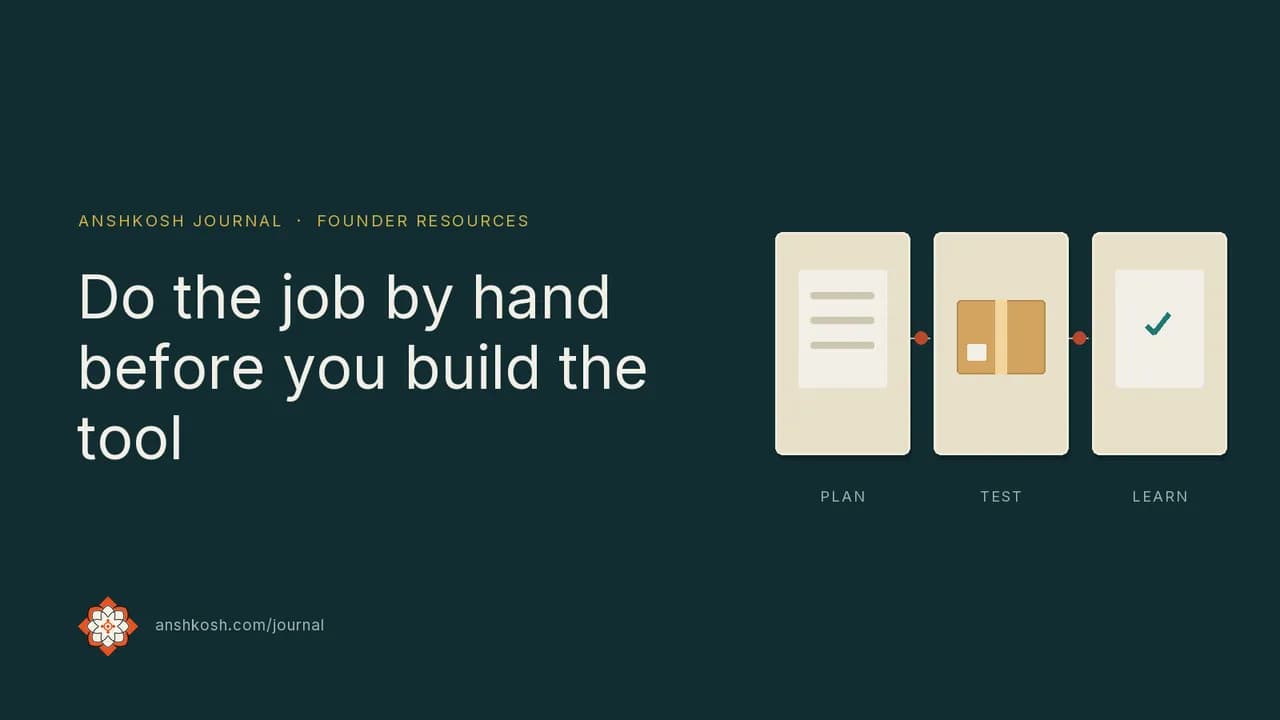
Do the job by hand before you build the tool
When you are unsure whether people want your product, opening a code editor can feel like the next step. Try delivering the result by hand before you build the tool. Use a spreadsheet, a message thread or a call. Doing…
When you are unsure whether people want your product, opening a code editor can feel like the next step.
Try delivering the result by hand before you build the tool. Use a spreadsheet, a message thread or a call.
Doing the work yourself helps you learn what the tool would need to do.
You do not need a finished app to find out what someone asks for when they hand you a task.
Learn where the work is
Manual delivery lets you see which steps take the most time and which parts people care about.
Listen to the questions they ask while you work. Notice which steps they pay no attention to and which details they ask about when something goes wrong.
Compare that experience with the process you imagined.
A step that seemed essential on paper may be something nobody needs. Something you left out may be the part people value most.
A mock-up can show the process you expect. Delivering the result gives you a chance to see what happens when someone brings you their own task.
Try it with a task people already have
Say you want to help small shops keep track of their orders.
Before you build an app, ask shop owners to send you their daily orders by message.
Copy the orders into a sheet, flag anything late and send back a short summary.
As you do this, note what the owners send and what they forget.
Listen to what they ask for. Pay attention to what they ignore.
The work may feel clumsy. Use that experience to understand the job before deciding how an app should handle it.
If you build around the process you imagined, you may automate a step the owners do not need and leave out something they care about.
Agree on what you will do
Choose people who have the problem. Friends who want to encourage you may give you a kind response without needing the service.
Tell people that you will do the work by hand and want to learn how it goes.
Describe what you will deliver so they know what to expect. Be clear that they are trying the service while you learn how to provide it.
Agree on a short trial period and when it will end.
When you check in, ask what they would want to keep and what they would drop.
Keep their answers alongside your notes about the work. They can help you decide which parts deserve more attention and which parts you can leave out.
Notice whether people return
Watch whether anyone asks for the result again without a reminder. That can help you understand whether the job matters to them.
If someone uses the service and does not return, record that too.
Do not assume a kind response means they want another round.
Write down the steps you take and the time each step takes. Note where you make a judgement.
When you choose what to automate, use that record to distinguish repeated work from decisions you still need to understand.
Keep the limits in mind
Manual delivery does not scale, and the work can be tiring.
People may value your attention more than the service. A good response does not prove they would use a tool without you.
Even if they return, you still need to understand which parts of the value depend on your involvement.
Use manual delivery to learn about the work. Treat what people say and do as information to examine before deciding what to build.
Automate the repeated steps you understand.
Keep a person involved in judgement calls until you can describe how those decisions work.
If you automate a process before you understand it, you may build around your guesses about what people need.
Which part of your product could you deliver by hand this month?
Anshkosh Team
Written for the Anshkosh Journal
More from Founder Resources
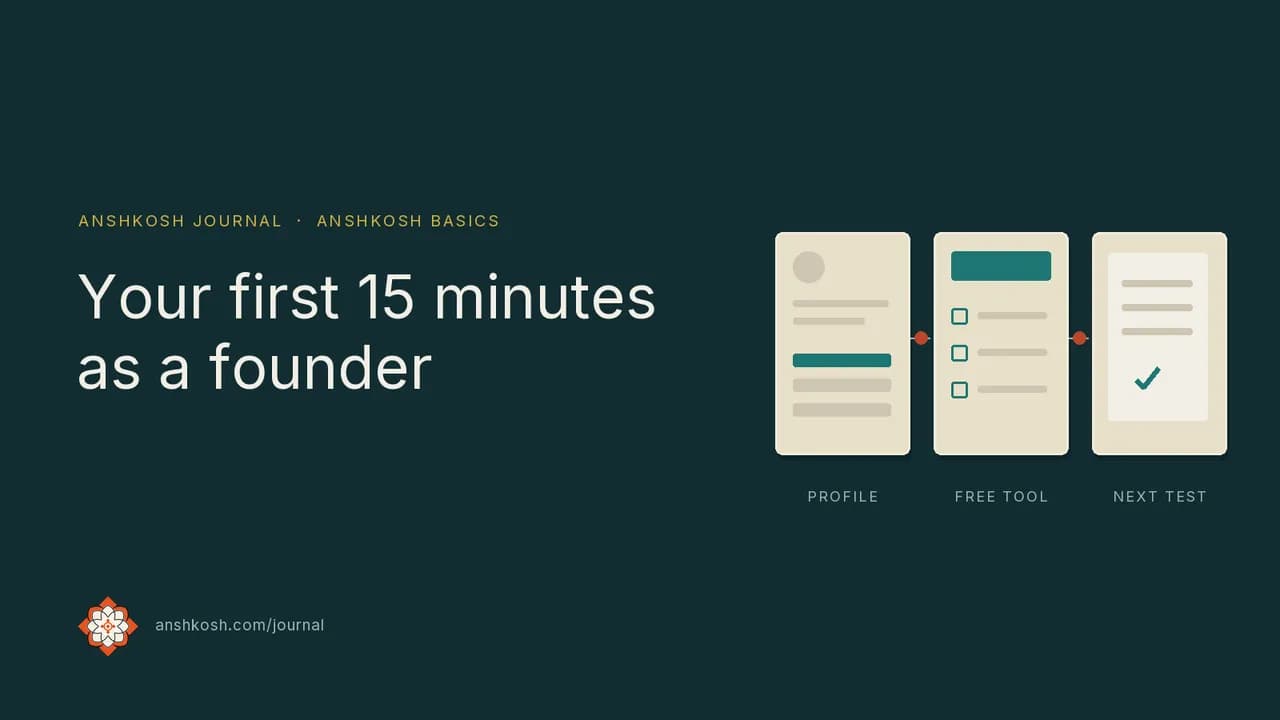
Anshkosh Basics: Your first 15 minutes as a founder
A practical starting point for founders: create a clear profile, use the free tools, gather evidence, and understand what is—and is not—live during the early-access pilot.
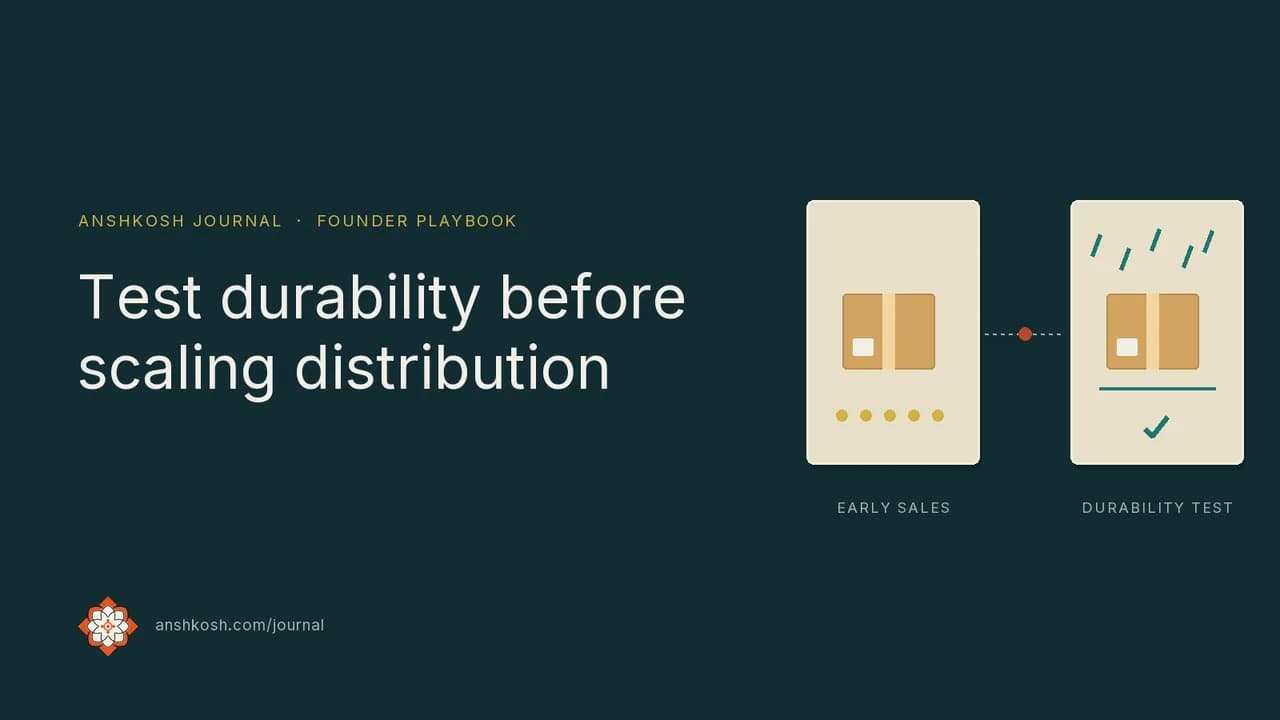
Test durability before scaling distribution
Check what early sales cannot tell you Early sales tell you that people bought your product. Monsoon returns help you check whether it lasts. For founders making physical goods for Indian consumers, checking durability…
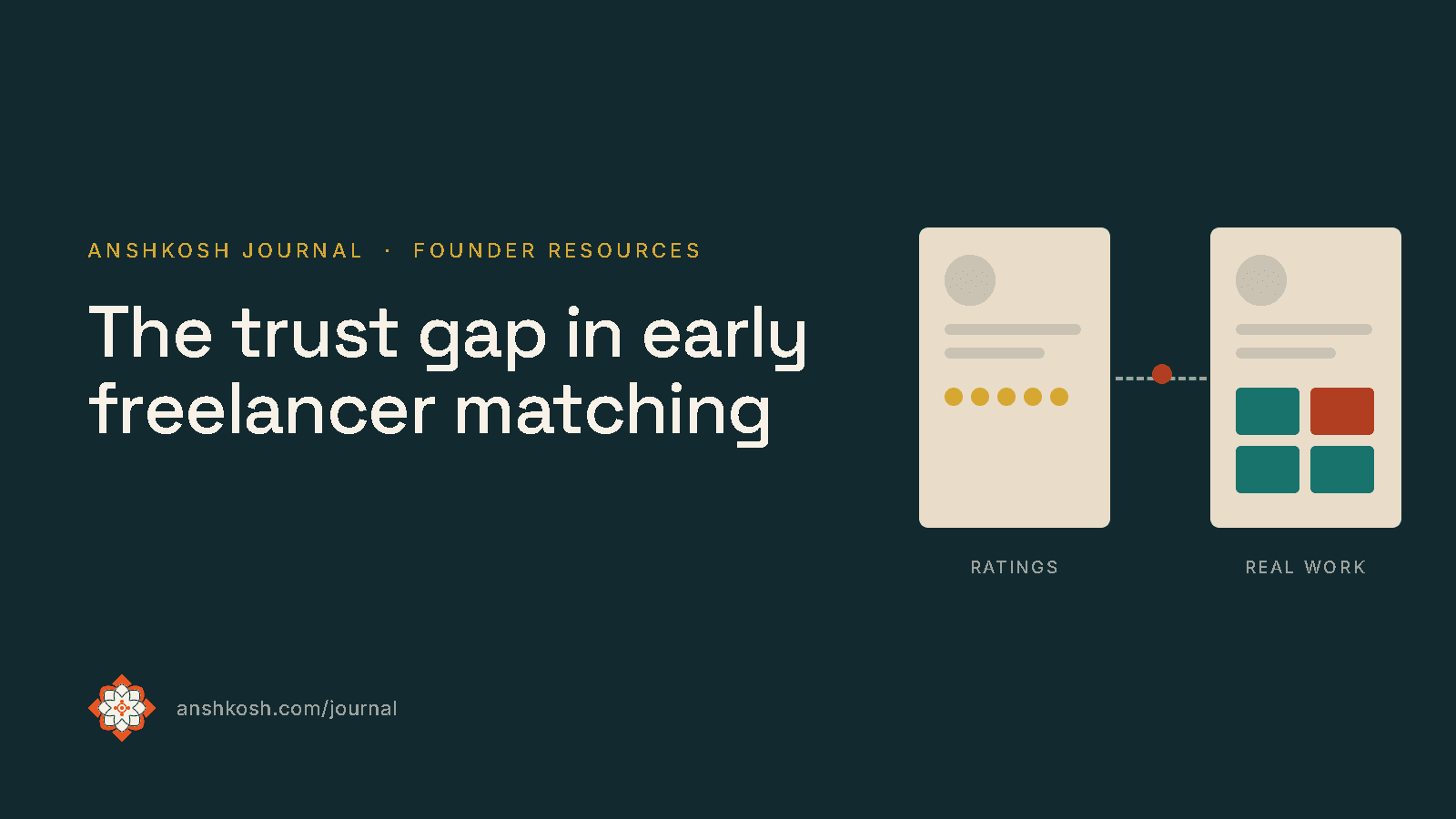
The trust gap in early freelancer matching
A high rating tells you about past work. A portfolio walkthrough helps you judge whether a freelancer fits the work in front of you. For founders acquiring their first ten users in a service marketplace, that difference…