
Loading article cover…
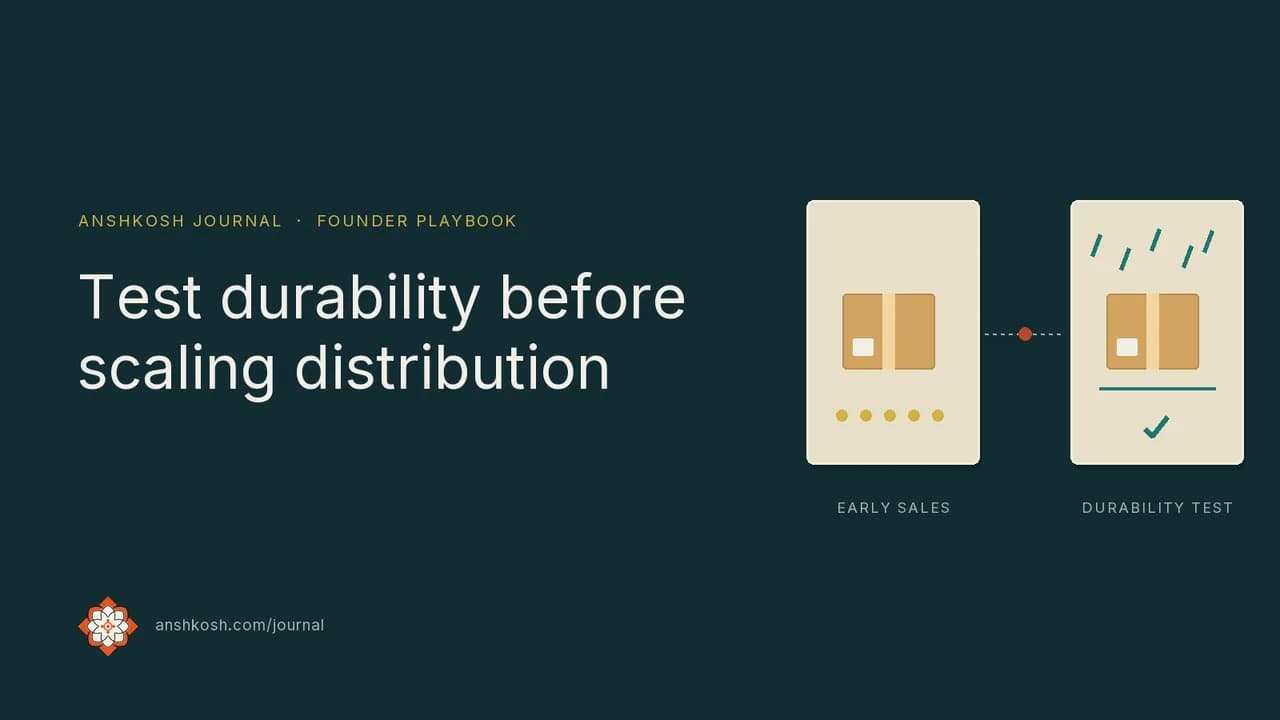
Test durability before scaling distribution
Check what early sales cannot tell you Early sales tell you that people bought your product. Monsoon returns help you check whether it lasts. For founders making physical goods for Indian consumers, checking durability…
Check what early sales cannot tell you
Early sales tell you that people bought your product. Monsoon returns help you check whether it lasts.
For founders making physical goods for Indian consumers, checking durability should come before seeking wider distribution.
Sales after a founder story can encourage you to expand before customers have used the product for weeks through heavy rain. Interest in the story does not tell you whether the product will hold up.
A product may sell well in dry weather and develop faults during the monsoon. Those faults can damage its reputation and leave you fixing problems after you have expanded distribution.
Use early sales as a reason to investigate durability. Before seeking partnerships or platform listings, compare returns and complaints in wet conditions with those in dry weather.
Look for faults that rain exposes
Humidity, water exposure and temperature changes can affect materials, adhesives, electronics and packaging.
A product that seems fine in dry months may swell, corrode, develop mold or fail after repeated use. A short demonstration may miss a problem that appears after weeks in a customer's hands.
Read the reasons customers give for complaints and returns. Their descriptions can help you identify limits in the materials or design.
Testing a prototype in ideal conditions cannot answer every question about durability. Compare what customers report during the monsoon with what they report in dry weather.
The return rate tells you how often customers return the product. The complaints help you understand what went wrong.
Compare wet and dry periods
Choose a 30-day monsoon window in your target region. Compare its return rates and customer complaints with those from a comparable dry-season period.
Keep marketing and pricing constant. Keep distribution channels the same, too.
Avoid changes to messaging or offers that could affect who buys or why they buy. These changes would make it harder to tell whether durability explains a difference between the periods.
Track return rates throughout the window and read the complaints alongside them. Look for reports of swelling, corrosion, mold or failures during repeated use.
Compare the wet and dry periods side by side.
A rise in returns or complaints gives you a reason to investigate. The comparison alone does not establish that rain caused the change. Examine the reported problems before deciding what to fix.
Similar numbers can support confidence in durability, but they do not guarantee that the product will hold up in every condition. Check whether complaints describe faults that the overall return rate might hide.
Use the comparison before expanding
If return rates and complaints remain low during the monsoon window, use that evidence in distribution conversations.
If they increase, investigate the faults before seeking wider distribution. Depending on what customers report, you may need to improve materials, seals or the design.
Do not let a partnership deadline decide whether you address a fault.
Fixing problems early can reduce the risk of recalls, bad reviews and strained retailer relationships. Discuss the reported problems with suppliers and use them to guide redesign work.
Repeat the comparison in later seasons to check whether quality remains consistent. A useful comparison this season does not remove the need to watch for problems later.
Use customer reports to decide what to do next. Excitement about early sales cannot resolve a durability problem.
Require resilience before expansion
A platform listing or retail deal gives your product more reach. It does not establish that the product can withstand the conditions customers face.
If the product fails during the monsoon, wider distribution can expose more customers to the fault. More visibility cannot repair it or recover the trust lost through a failed purchase.
Sustainable distribution starts with evidence that the product holds up under real use. Examine that evidence before a placement deadline pressures you to expand.
What would your monsoon return rates and complaints need to show, compared with the dry-season baseline, before you seek wider distribution?
Anshkosh Team
Written for the Anshkosh Journal
More from Founder Resources
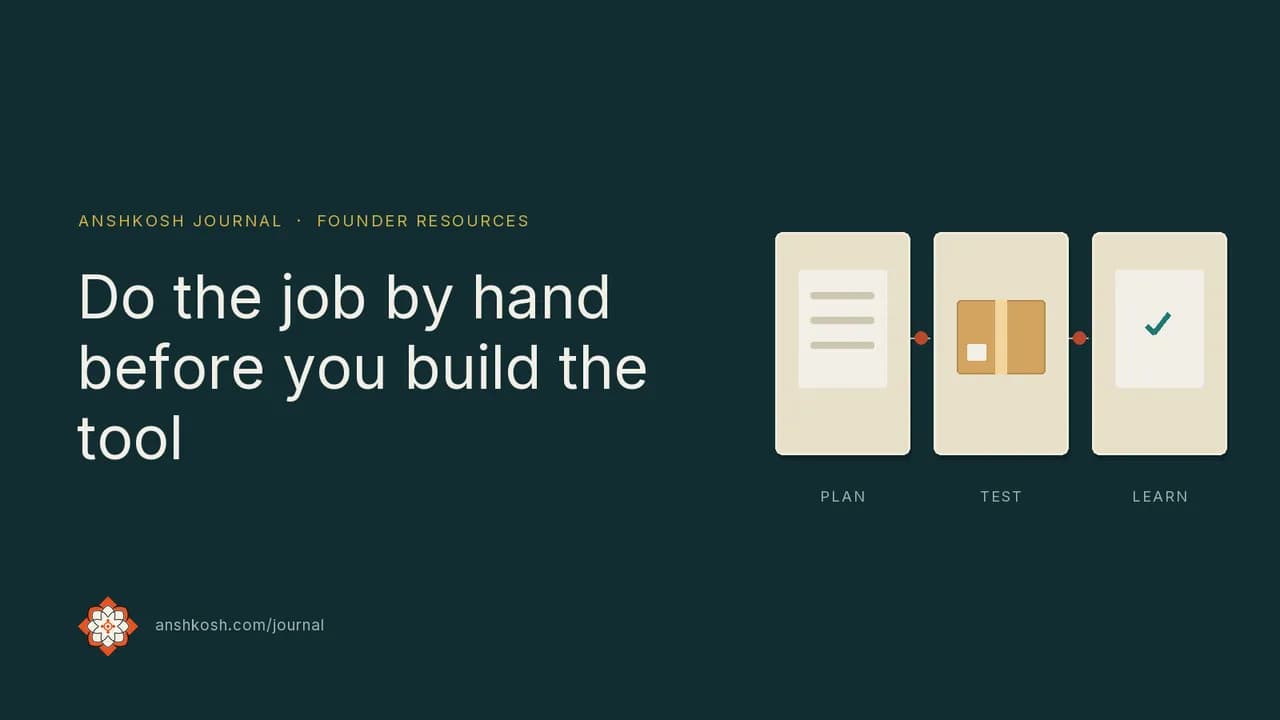
Do the job by hand before you build the tool
When you are unsure whether people want your product, opening a code editor can feel like the next step. Try delivering the result by hand before you build the tool. Use a spreadsheet, a message thread or a call. Doing…
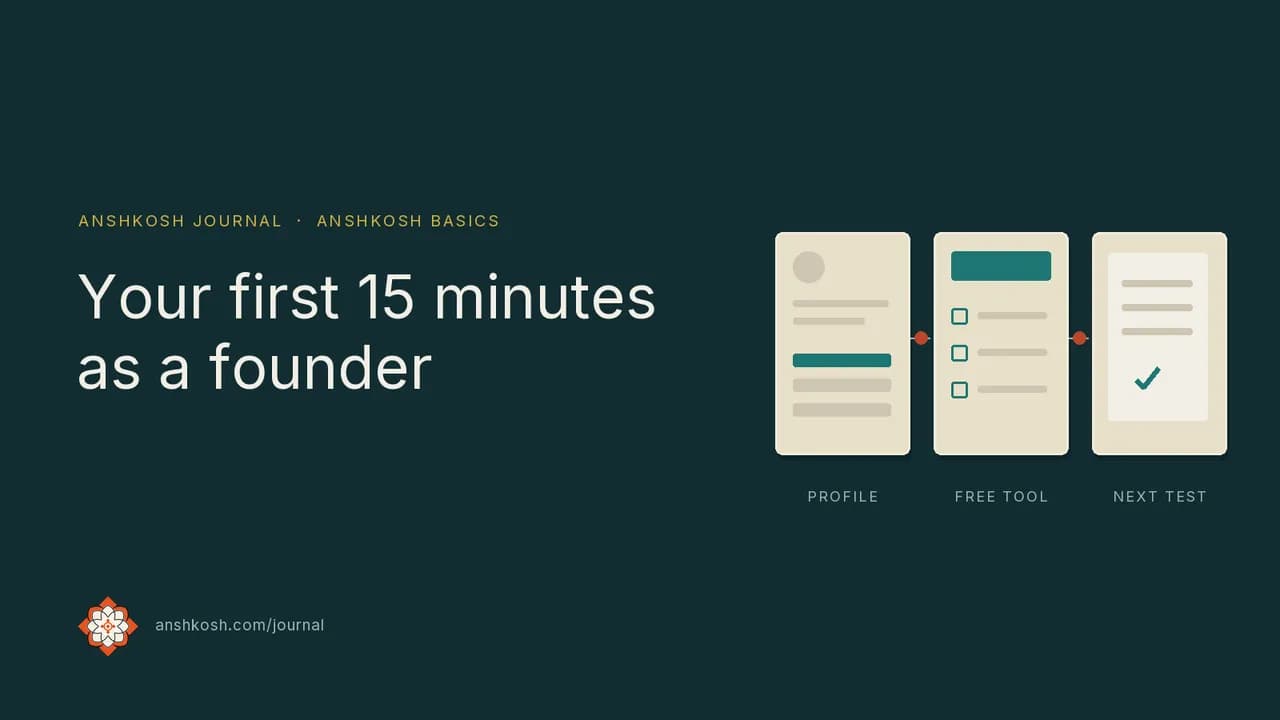
Anshkosh Basics: Your first 15 minutes as a founder
A practical starting point for founders: create a clear profile, use the free tools, gather evidence, and understand what is—and is not—live during the early-access pilot.
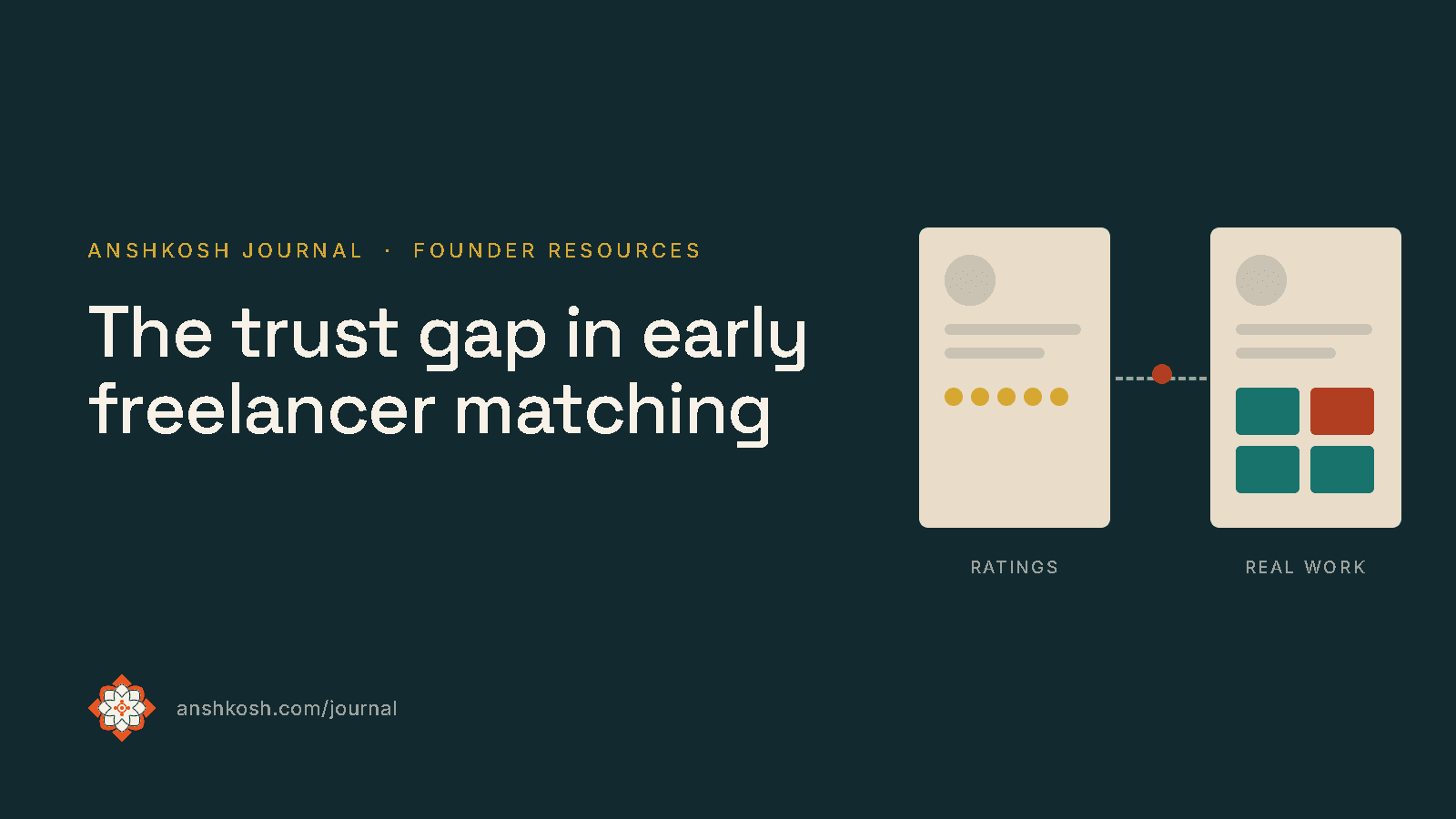
The trust gap in early freelancer matching
A high rating tells you about past work. A portfolio walkthrough helps you judge whether a freelancer fits the work in front of you. For founders acquiring their first ten users in a service marketplace, that difference…