
Loading article cover…
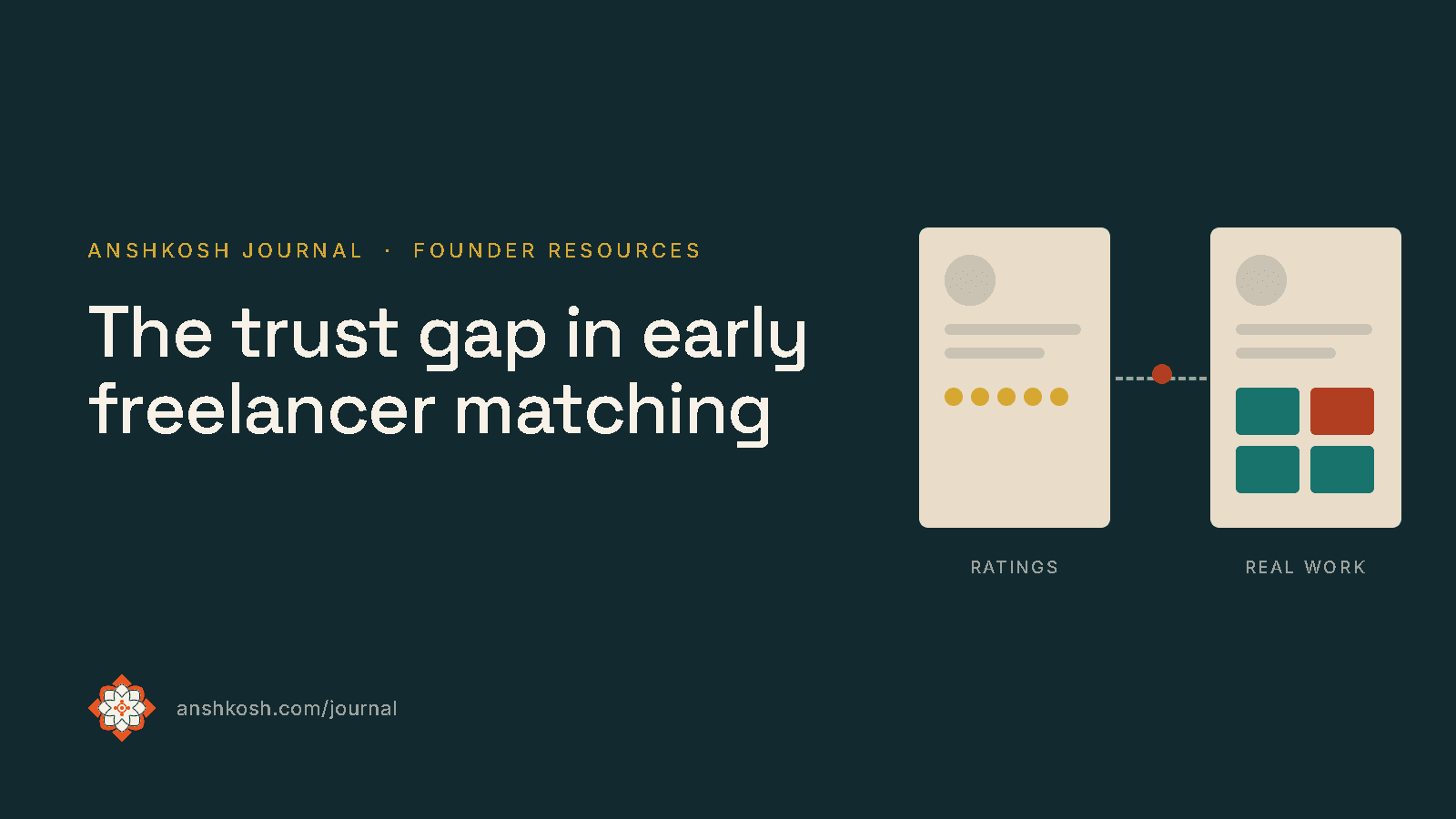
A high rating tells you about past work. A portfolio walkthrough helps you judge whether a freelancer fits the work in front of you. For founders acquiring their first ten users in a service marketplace, that difference…
A high rating tells you about past work. A portfolio walkthrough helps you judge whether a freelancer fits the work in front of you.
For founders acquiring their first ten users in a service marketplace, that difference matters. A platform score can give a client confidence without answering the questions that shape a first booking.
Does the freelancer understand the brief? Does the client expect work that the profile has never shown?
Those gaps become harder to ignore once the job starts. The freelancer may misunderstand what the client wants. The client may expect something different from what the freelancer delivers. The booking can end in rework or a refund, and the user may leave after one job.
A high score can make a match seem safer than it is. Ratings reflect past outcomes. Those outcomes may involve work that does not match the new task. A rating alone does not show how the freelancer thinks through this client's brief or how the two people will communicate.
Before relying on that score, give both sides a chance to understand the work.
For the first ten users, make time for a portfolio walkthrough. These reviews let people see work and discuss it before they commit. The point is to make expectations clear enough that a first booking does not depend on assumptions about what a rating means.
In a portfolio review, walk through past work with the freelancer. Ask how they approached it and what made it difficult. Ask about the tools they used. Give the client a chance to see the work behind the profile and understand the freelancer's way of working.
Keep the conversation tied to the booking. A portfolio can show completed work, but the review should help both sides judge whether that work is relevant to the client's expectations. Do not treat the score as proof of fit when the brief still needs a conversation.
Try comparing two approaches to first-time bookings.
For one group, rely solely on the platform ratings. For the other, require a fifteen-minute portfolio review before booking. Use a live or recorded walkthrough of past work with the freelancer.
Keep the review step mandatory for that group so you can compare bookings that include it with bookings that rely on ratings alone.
After each job, track whether the client asks for rework or requests a refund. Do this for both groups. Measure the percentage of first-time bookings that result in either outcome.
Do not decide in advance that the review must work. Collect the data and compare the percentages. The question is whether bookings with a portfolio review have fewer problems after the job than bookings based solely on ratings.
If the percentage is lower for the review group, that suggests the review may help prevent those problems. Use what you learn to decide how to handle the next bookings. A review may build confidence, but the comparison needs to show whether that confidence comes with less rework or fewer refunds.
This also gives you a way to examine early churn. When someone leaves after one job, the idea itself may not be the problem. Their first experience may have felt unclear or unsafe because neither side checked what the other expected.
At low volume, earn trust by making the work and expectations clear. Before you automate more of the matching process, check whether your first users have enough information to commit.
Skipping that conversation can leave you adding bookings while users leave after their first experience.
What would you have to give up to include a fifteen-minute portfolio walkthrough in your first ten bookings?
Anshkosh Team
Written for the Anshkosh Journal
More from Founder Resources
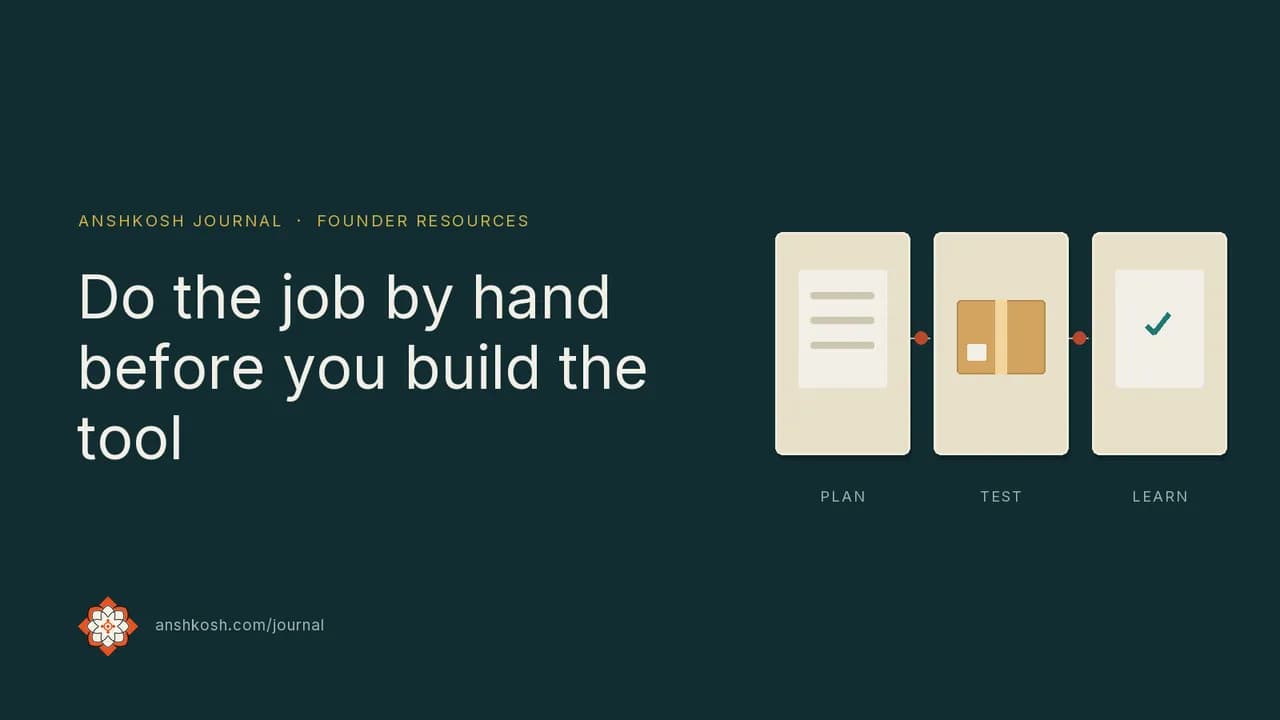
Do the job by hand before you build the tool
When you are unsure whether people want your product, opening a code editor can feel like the next step. Try delivering the result by hand before you build the tool. Use a spreadsheet, a message thread or a call. Doing…
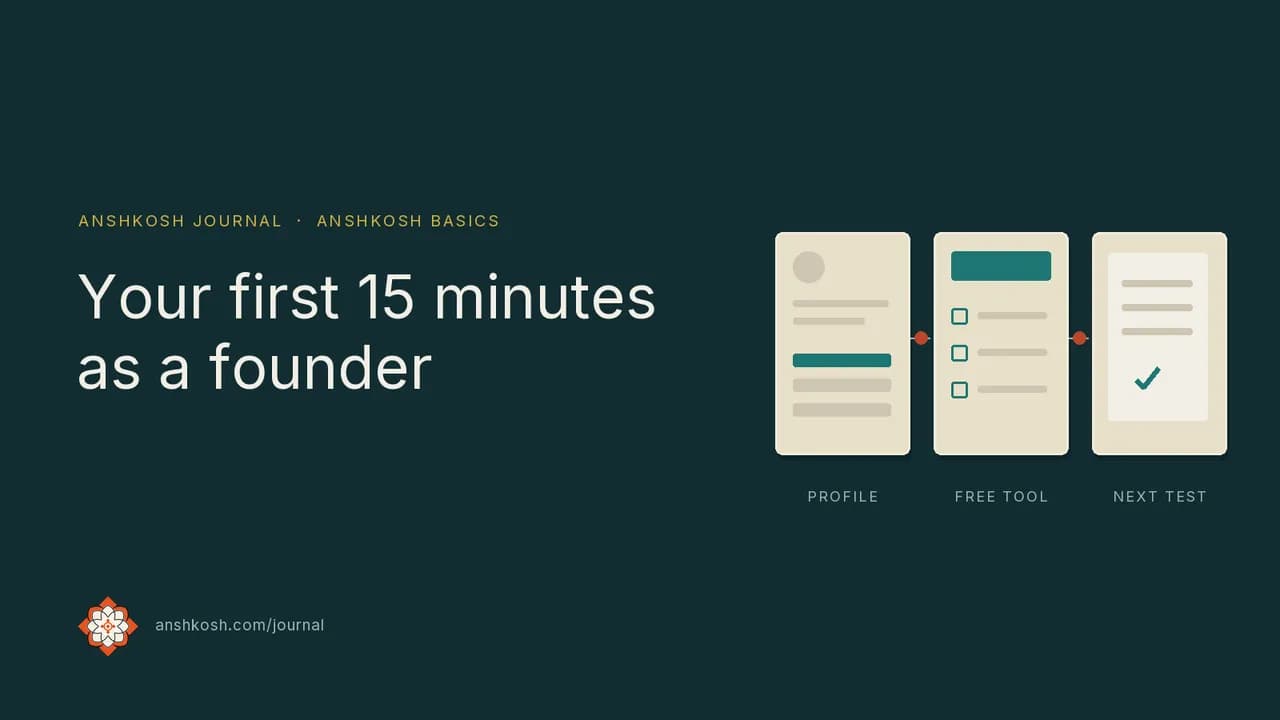
Anshkosh Basics: Your first 15 minutes as a founder
A practical starting point for founders: create a clear profile, use the free tools, gather evidence, and understand what is—and is not—live during the early-access pilot.
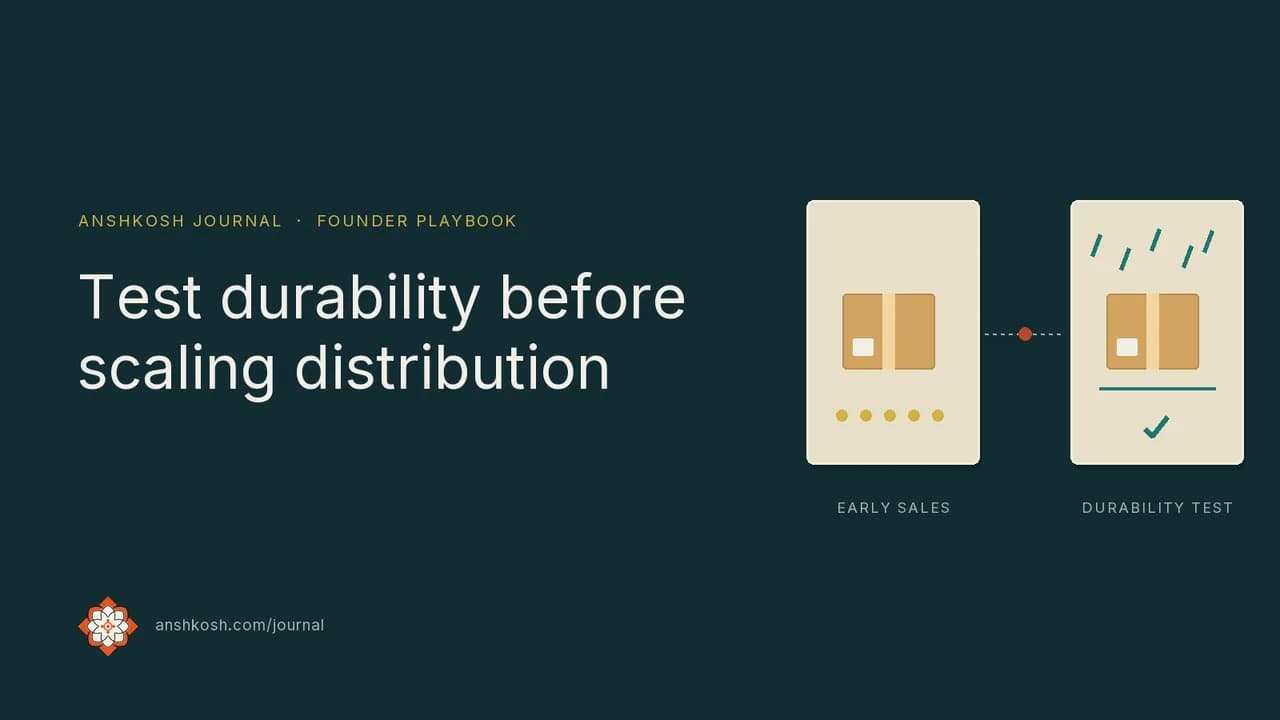
Test durability before scaling distribution
Check what early sales cannot tell you Early sales tell you that people bought your product. Monsoon returns help you check whether it lasts. For founders making physical goods for Indian consumers, checking durability…